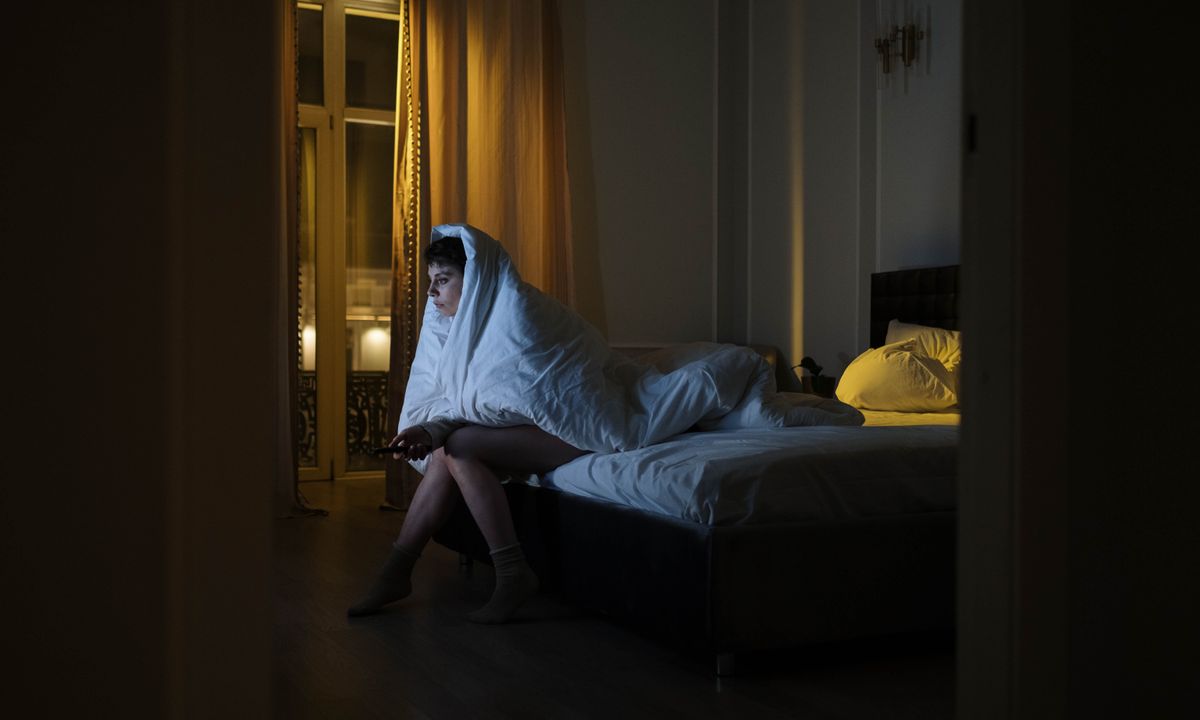
One of the cruelest surprises of perimenopause is that sleep can unravel years before your periods do. You're still getting periods — maybe still fairly regular ones — yet suddenly you're wide awake at 3 a.m. for no reason you can name. This isn't your imagination, and it isn't a post-menopause problem arriving early. Research that tracked women through the transition shows sleep difficulty climbing steadily as perimenopause progresses.
The evidence is transition-specific
The Study of Women's Health Across the Nation (SWAN) is one of the few large studies that followed the same women across each stage. It found that difficulty sleeping increased in a near-straight line: roughly 30% of women reported trouble sleeping in the premenopausal years, and that figure rose through early and then late perimenopause. In other words, the problem builds with the transition itself — it doesn't wait for your final period.
The most common complaint isn't trouble falling asleep, but increased awakenings during the night — that hallmark pattern of dropping off fine, then surfacing again and again.
What's driving it
Perimenopause is defined by fluctuating, not simply low, hormones. Estrogen and progesterone both help regulate sleep, and as their levels swing and gradually decline, sleep becomes lighter and more fragile. A few specific mechanisms stand out:
- Progesterone's calming role fades. Progesterone has sleep-promoting, anxiety-reducing effects, so its decline removes some of the body's natural sedation.
- Night sweats interrupt sleep. Vasomotor symptoms (hot flashes and night sweats) can jolt you awake or strike just as you're drifting off.
- The brain becomes more "switched on" at night. Strikingly, SWAN found that late-perimenopausal women showed more high-frequency beta EEG activity during sleep — a sign of greater cortical hyperarousal, essentially a brain that stays more alert even while asleep. This may help explain why sleep feels shallow and unrefreshing even on nights without obvious night sweats.
The takeaway
Perimenopausal sleep disruption has measurable biological drivers — fluctuating hormones, night sweats, and a more hyperaroused sleeping brain — and recognizing it as a real feature of the transition is the first step toward treating it rather than enduring it.
The next articles in this series look at why this matters beyond feeling tired, and what actually helps.
This article is for general information and is not medical advice. Talk with a qualified clinician about persistent sleep problems.
Sources
PeriShift starts with a 30-day free trial on Android and iPhone. No account. No cloud. Your logs stay on your phone.
Get PeriShift on Google Play → Get PeriShift on the App Store →